Claude Hammond's Blog

  C.E. Hammond
  • Blog
  • Wally Carr
  • About

Lessons from Ancient Greece: Democracy Is A Tool, But Liberty Creates Strength.

9/21/2022

0 Comments

 
Picture
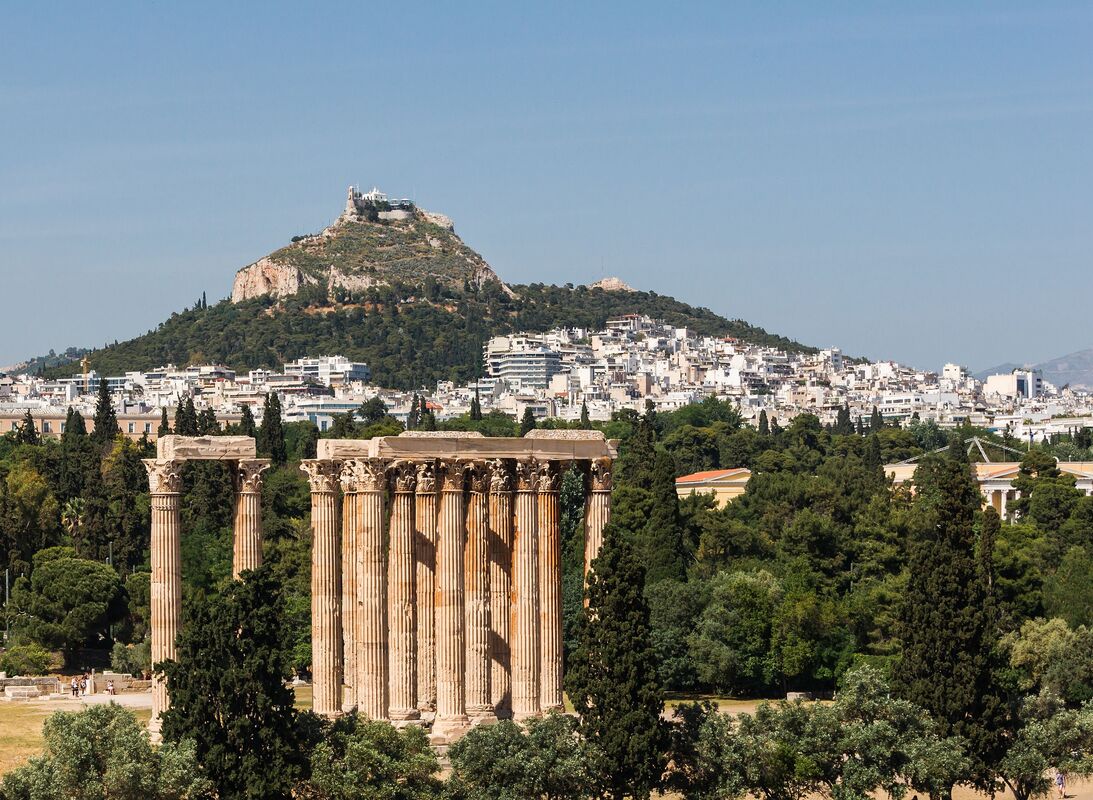
Modern Athens (Wikimedia Commons photo).
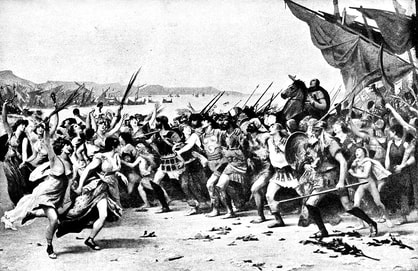
PictureThe victory of Themistocles the Athenian at Salamis. (Wikimedia Commons).
Democracy does not equal freedom.

History gives us a great example of a democracy that promoted eugenics, government economic control, and a worthless fiat currency, all more than 2,000 years ago. 

This was Sparta, the ancient Greek city-state.

The word "democracy", as Spartans used it, was not the same as “freedom.” It is not a guarantee of human rights.

Democracy is a method.  In a society that does not recognize human rights, democracy is a con game that implies — but NEVER guarantees — freedom.

Fiercely militaristic and brutal, Sparta had democracy a full century and a half before Athens. But its rulers did not recognize the rights of its citizens.

Spartan democracy was mob rule.

Sparta enforced brutal militaristic laws written by Lycurges, a 7th Century BCE tyrant. Spartan law required eugenics. Every newborn child was examined; if the child did not meet the physical standards of the law, it was discarded into a pit and left to perish by exposure to the elements and wild animals.

Spartan law required that boys to be taken away from their families at the age of seven. The boys would then begin the military training that would continue for the rest of their lives. 

Spartan boys were taught to fight, wrestle, steal, lie, and forage. They were purposely underfed and had to use those skills or otherwise starve. Part of the military discipline for boys included regular beatings.

“So seriously did the Lacedemonian (Spartan) children go about their stealing, that a youth, having stolen a young fox and hid it under his coat, suffered it to tear out his very bowels with its teeth and claws, and died upon the place, rather than let it be seen. …I myself have seen several of the youths endure whipping to death at the foot of the altar of Artemis…”
— Plutarch

Seeing boys beaten to death was a common experience in Sparta. It was a brutal way of discipline and seen as an aspect of growing into manhood. This continued into adulthood with Spartan soldiers being brutally treated by their commanders.

By the time a boy was a teenager, he had frequently seen death. One can understand how Spartans became fierce fighters. The boys were taught little else.

The Spartan’s duty was to fight for his tyrants, but not for his rights. Theirs was a North Korean sort of democracy. 

Spartans were not allowed to own gold and silver. That city-state issued an iron coin that was worthless in every other city. This discouraged trade with outsiders. It discouraged innovation.

Foreigners could only trade with the Spartan government or its elites -- and not its commoners. The worthless iron currency prevented Spartans from fleeing their city for a better life elsewhere, and gave the government control of what could be bought and sold.

Spartan monetary policy repressed industry and business. Without the ability to export for precious metals that could be spent almost everywhere else in the ancient world, Spartans were not motivated to work in any kind of commerce.

And then there were the Athenians.

Athenian democracy developed about 150 years after Sparta. It accelerated after Cleisthenes reformed the government and established the individual rights of each Athenian.

When an Athenian went into battle, he was not fighting for his homeland, or for a tyrant, or even for his government. The typical Athenian soldier fought for himself and his rights.

This difference between Sparta and Athens was put to the test early.

Cleisthenes’ reforms alarmed Sparta. Its army joined with the forces of Isagoras, the deposed Athenian tyrant (in 508-507 BCE), to overthrow the new government and its concept of human rights.

It should have been an easy task for the Spartans. Their army had the most powerful infantry in the world at that time. 

They invaded Athens and…

Sparta’s army was destroyed. The common people of Athens rose up.  They fiercely defended their rights against Sparta and tyranny. 

So personal freedom in Athens had immediate results. And those results were dramatic. The arts and literature blossomed. So did technology. The age of Pericles, a mighty commoner who led Athens for more than 30 years, transformed that city. 

Athenian businesses were promoted. Its merchants and businesses prospered, being paid in silver and gold. Athenian economic power increased. With the resulting wealth, the arts, philosophy and literature prospered. Athenian technological innovation was unmatched, and it set the stage for a future empire. 

Today, the world still studies the brilliance of Athenian culture, which eclipses Sparta.

Sparta continued as a military power. In future years, that warrior nation would sometimes ally itself with Athens to repel foreign invaders.

Sparta’s military would eventually suffer because it never evolved by recognizing the rights of its people. Repression destroys innovation and Sparta‘s military had become technologically inferior.  In desperation, Sparta was forced to rely on the Athenian military and its superior technology. 

An example of Athenian technology saving the day for Sparta was when (480 BCE) Xerxes the Great invaded Greece with what was likely the world’s largest army. Persian troops sacked and burned Athens, but the technologically superior Athenian navy escaped. The Athenian admiral, Themistocles , came before Spartan rulers and urged them to attack the approaching Persian navy.

Themistocles’ argument convinced the Spartans to attack, because, if Sparta would not fight, the Athenian navy would depart. With its primitive ships, Sparta would fall in the resulting invasion.

The Spartan admiral “…feared that if he withdrew his fleet… the Athenians would sail away, and knew that without the Athenians, the rest of their ships could be no match for the fleet of the enemy.“
— Herodotus 

The Spartan leaders listened to Themistocles. The invaders were defeated at Salamis, thanks to Athenian technology and innovation. 

Salamis was a great naval victory over Persia. The Battle of Salamis was also a triumph of an Athenian system that recognized human rights, freedom of commerce, the arts, and innovation, over a stale, state-controlled Spartan system.

This point was proven a second time the next year at the Battle of Platea (479 BCE). Athens and Sparta faced the Persians in an immense land battle. As fierce as they were, Spartan forces had to retreat from Persians fortresses because they did not have the technology to lay siege. 

But the Athenians did.

“So long as the Athenians were away, the barbarians kept off their assailants, and had much the best of the combat, since the Lacedamonians (Spartans) in the attack of walled places, but on the arrival of the Athenians, a more violent assault was made… In the end, the valor of the Athenians and their perseverance prevailed…”
— Herodotus

The Persians had a superior number of soldiers. Athens lay in charred ruins. The Athenians had every reason to admit defeat, but they kept fighting. The Athenians valued their rights, no matter what the situation.

Both the naval battle of Salamis and the land battle of Platea were won by Athenian troops due to their dedication to preserving their liberty. The innovation that had resulted from that liberty and from a free economy, made it possible.

Great lessons with modern applications are to be learned with this history.  

0 Comments


Leave a Reply.

    Picture

    About claude E. hammond

    Claude Ellis Hammond, J.D., is a continuing education professional.  He speaks frequently on historic and esoteric subjects. He's also an expert on coffee and drinks a lot of it.

    ​Originally from Kentucky, Claude's lived in places as diverse as Abu Dhabi, UAE, and Cumberland Island, Georgia. He lives in a small town in Texas.

    Archives

    August 2022
    June 2022

    Categories

    All
    History Lessons
    Philosophy
    Wally

    RSS Feed

C. Ellis Hammond, JD

  • Blog
  • Wally Carr
  • About