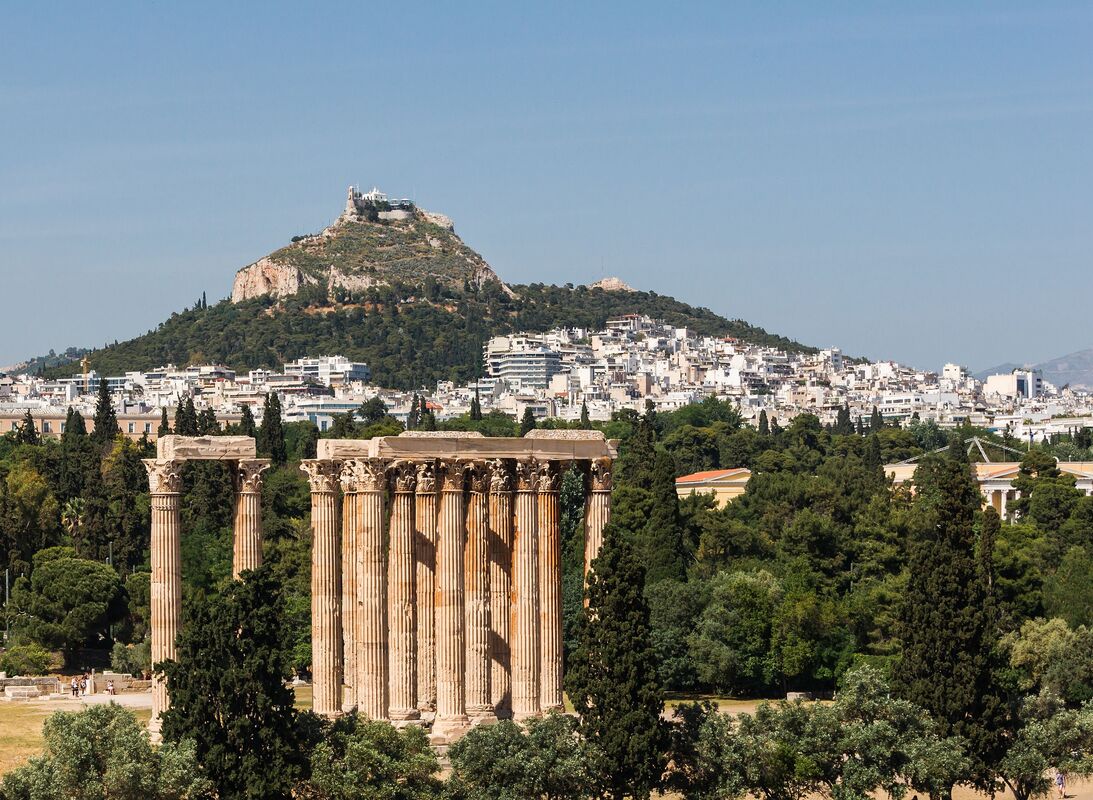
 Modern Athens (Wikimedia Commons photo). 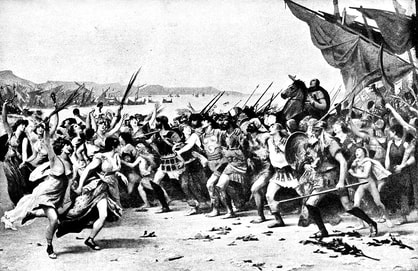 The victory of Themistocles the Athenian at Salamis. (Wikimedia Commons). The victory of Themistocles the Athenian at Salamis. (Wikimedia Commons). Democracy does not equal freedom.
History gives us a great example of a democracy that promoted eugenics, government economic control, and a worthless fiat currency, all more than 2,000 years ago. This was Sparta, the ancient Greek city-state. The word "democracy", as Spartans used it, was not the same as “freedom.” It is not a guarantee of human rights. Democracy is a method. In a society that does not recognize human rights, democracy is a con game that implies — but NEVER guarantees — freedom. Fiercely militaristic and brutal, Sparta had democracy a full century and a half before Athens. But its rulers did not recognize the rights of its citizens. Spartan democracy was mob rule. Sparta enforced brutal militaristic laws written by Lycurges, a 7th Century BCE tyrant. Spartan law required eugenics. Every newborn child was examined; if the child did not meet the physical standards of the law, it was discarded into a pit and left to perish by exposure to the elements and wild animals. Spartan law required that boys to be taken away from their families at the age of seven. The boys would then begin the military training that would continue for the rest of their lives. Spartan boys were taught to fight, wrestle, steal, lie, and forage. They were purposely underfed and had to use those skills or otherwise starve. Part of the military discipline for boys included regular beatings. “So seriously did the Lacedemonian (Spartan) children go about their stealing, that a youth, having stolen a young fox and hid it under his coat, suffered it to tear out his very bowels with its teeth and claws, and died upon the place, rather than let it be seen. …I myself have seen several of the youths endure whipping to death at the foot of the altar of Artemis…” — Plutarch Seeing boys beaten to death was a common experience in Sparta. It was a brutal way of discipline and seen as an aspect of growing into manhood. This continued into adulthood with Spartan soldiers being brutally treated by their commanders. By the time a boy was a teenager, he had frequently seen death. One can understand how Spartans became fierce fighters. The boys were taught little else. The Spartan’s duty was to fight for his tyrants, but not for his rights. Theirs was a North Korean sort of democracy. Spartans were not allowed to own gold and silver. That city-state issued an iron coin that was worthless in every other city. This discouraged trade with outsiders. It discouraged innovation. Foreigners could only trade with the Spartan government or its elites -- and not its commoners. The worthless iron currency prevented Spartans from fleeing their city for a better life elsewhere, and gave the government control of what could be bought and sold. Spartan monetary policy repressed industry and business. Without the ability to export for precious metals that could be spent almost everywhere else in the ancient world, Spartans were not motivated to work in any kind of commerce. And then there were the Athenians. Athenian democracy developed about 150 years after Sparta. It accelerated after Cleisthenes reformed the government and established the individual rights of each Athenian. When an Athenian went into battle, he was not fighting for his homeland, or for a tyrant, or even for his government. The typical Athenian soldier fought for himself and his rights. This difference between Sparta and Athens was put to the test early. Cleisthenes’ reforms alarmed Sparta. Its army joined with the forces of Isagoras, the deposed Athenian tyrant (in 508-507 BCE), to overthrow the new government and its concept of human rights. It should have been an easy task for the Spartans. Their army had the most powerful infantry in the world at that time. They invaded Athens and… Sparta’s army was destroyed. The common people of Athens rose up. They fiercely defended their rights against Sparta and tyranny. So personal freedom in Athens had immediate results. And those results were dramatic. The arts and literature blossomed. So did technology. The age of Pericles, a mighty commoner who led Athens for more than 30 years, transformed that city. Athenian businesses were promoted. Its merchants and businesses prospered, being paid in silver and gold. Athenian economic power increased. With the resulting wealth, the arts, philosophy and literature prospered. Athenian technological innovation was unmatched, and it set the stage for a future empire. Today, the world still studies the brilliance of Athenian culture, which eclipses Sparta. Sparta continued as a military power. In future years, that warrior nation would sometimes ally itself with Athens to repel foreign invaders. Sparta’s military would eventually suffer because it never evolved by recognizing the rights of its people. Repression destroys innovation and Sparta‘s military had become technologically inferior. In desperation, Sparta was forced to rely on the Athenian military and its superior technology. An example of Athenian technology saving the day for Sparta was when (480 BCE) Xerxes the Great invaded Greece with what was likely the world’s largest army. Persian troops sacked and burned Athens, but the technologically superior Athenian navy escaped. The Athenian admiral, Themistocles , came before Spartan rulers and urged them to attack the approaching Persian navy. Themistocles’ argument convinced the Spartans to attack, because, if Sparta would not fight, the Athenian navy would depart. With its primitive ships, Sparta would fall in the resulting invasion. The Spartan admiral “…feared that if he withdrew his fleet… the Athenians would sail away, and knew that without the Athenians, the rest of their ships could be no match for the fleet of the enemy.“ — Herodotus The Spartan leaders listened to Themistocles. The invaders were defeated at Salamis, thanks to Athenian technology and innovation. Salamis was a great naval victory over Persia. The Battle of Salamis was also a triumph of an Athenian system that recognized human rights, freedom of commerce, the arts, and innovation, over a stale, state-controlled Spartan system. This point was proven a second time the next year at the Battle of Platea (479 BCE). Athens and Sparta faced the Persians in an immense land battle. As fierce as they were, Spartan forces had to retreat from Persians fortresses because they did not have the technology to lay siege. But the Athenians did. “So long as the Athenians were away, the barbarians kept off their assailants, and had much the best of the combat, since the Lacedamonians (Spartans) in the attack of walled places, but on the arrival of the Athenians, a more violent assault was made… In the end, the valor of the Athenians and their perseverance prevailed…” — Herodotus The Persians had a superior number of soldiers. Athens lay in charred ruins. The Athenians had every reason to admit defeat, but they kept fighting. The Athenians valued their rights, no matter what the situation. Both the naval battle of Salamis and the land battle of Platea were won by Athenian troops due to their dedication to preserving their liberty. The innovation that had resulted from that liberty and from a free economy, made it possible. Great lessons with modern applications are to be learned with this history.
0 Comments
 There are two kinds of people. Epictetus teaches us how to identify between them. (Wikimedia Commons image) 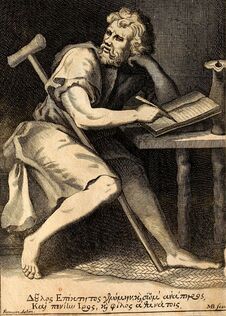 Stoic Philosopher Epictetus (50-135 AD). Stoic Philosopher Epictetus (50-135 AD). “Don’t worry about the things you can’t control.“ How many times have you heard that old saying? It’s common sense. It’s also a great Stoic teaching. It’s benefited people over the thousands of years since it was advocated by philosophers in ancient Greece. Like all great wisdom teachings, this is as powerful a life lesson today as it was back then. Using this lesson, the Greek Stoic Epictetus makes an amazingly accurate analysis of human psychology. Epictetus says there are two kinds of people. The first kind are those who are only concerned with things they can control. They don’t worry about what is beyond their control. These people avoid an awful lot of stress. The second type of people are those who let themselves be manipulated by things they can’t control. “Some are free from hindrance and in the power of the will of those around them. Others are subject to hindrance, and depend on the will of others.” — Epictetus (50 -135 A.D.) What Epictetus says here is amazing. He reveals the character traits that result from the mindsets of these two kinds of people. “If then he places his own good, his own best interest, only in that which is in his power and is free from the control of others, he will be free, tranquil, happy, unharmed, noble-hearted, and pious; giving thanks to God for all things, finding fault with nothing that happens, blaming no outside influence for his problems. “Where if he places his security in outward things, not depending on his own will, he will be subject to hindrance and restraint, the slave of those that have power over the things he desires and fears…” — Epictetus Epictetus’ analysis is deadly accurate. These two types of people are easily identified. You see these mindsets in politics, media, and religion. The “can-do” mindset of the Stoic is held by those who make changes where they can. These are the movers and shakers of this world. A great example is Rosa Parks, who acted on a small scale in 1955 Alabama. Rosa refused to sit in the back of a bus, which was demanded of all African-Americans of that place and time. Her act triggered a cascade of events that helped reform civil rights in the United States. Yet, she acted on a small scale, within the scope of the things she could control. Even if she didn't realize it at the time, Rosa was a great Stoic. She didn’t fret about things she couldn’t control, but acted with conscience and integrity with things she could control. Rosa Parks changed the world as a result. But those who believe they are subject to the will of others become self-made victims. These people are told what to do by the internet or media or unethical leaders. These can manipulate this sizable audience by enhancing a self-perceived “victim“ status. This audience is easily controlled once its members are steered away from any sort of responsibility. That prevents them from changing their own lives and developing self-reliance. The self-made victim becomes dependent on systems not created for their benefit. Extremists are frequently this kind of person. The self-made victim takes the easiest and least responsible way in life. (That’s easy to do if there is financial support somewhere.) This is how, in 21st Century America, we get the stereotypical young adult living in the basement of his parents’ home; entitled, unemployed and playing video games. Self-made victims are naive. They hope to be led by and provided for by others. They always end up getting used. “There’s a sucker born every minute.“ — Phineas T. Barnum “Make yourself sheep, and the wolves will eat you.” — Benjamin Franklin “Evil always wins through the strength of its splendid dupes…“ — G. K. Chesterton. Self-made victims -- the dupes -- lose their courage and ability to be self-reliant. This destroys their character. Epictetus says those convinced of their own helplessness become embittered against God and those around them for not coming to their rescue. “…he will be impious, because he thinks he has been injured at the hands of God; he will be unjust, always prone to claim more than his due; he will have a mean and depressed spirit.” — Epictetus Those who believe they are victims are less likely to seek an answer, or to create one for themselves. Those who create change in the things they can control pioneer new territory in their own lives. They live life on their own terms. Leaving things better off than you found them leads to a life of accomplishment, self-worth, and satisfaction. And that’s a great lesson from a Stoic. 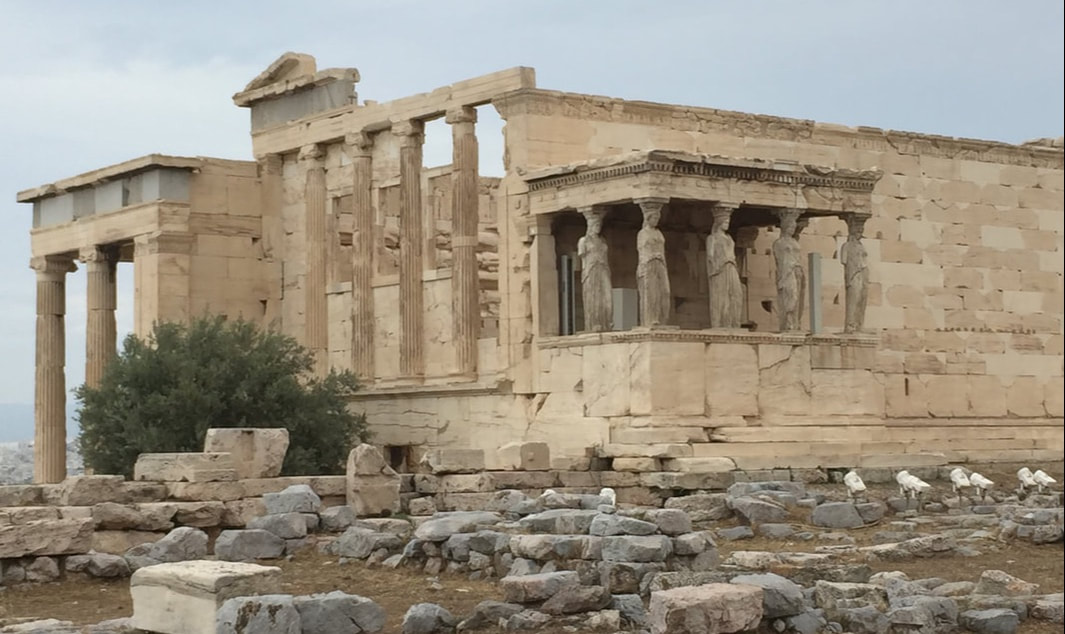 Temple of Athena, the Acropolis, Athens. (Claude Hammond photo) 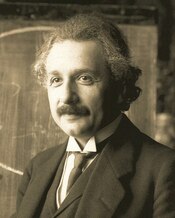 Albert Einstein in 1921. (F. Schmutzer photo / Wikimedia Commons) Albert Einstein in 1921. (F. Schmutzer photo / Wikimedia Commons) August 17, 2022
What is a mystic anyway? Is it that guy on the talk shows who writes all those books with his picture on the cover? Maybe you can find a mystic online with your favorite search engine. Or perhaps if you hike to a distant cave in the Himalayas, you’ll find a sage living there who can explain the meaning of life. Great mystic teachers are still with us — and always have been. They’re out there. Humanity would be nothing without them. Mystics have contributed to our lives in innumerable ways. We can’t escape their influence. Some of them don’t bother to write down what they say. For example, Socrates, Epictetus, Jesus, and Lao Tzu’s teachings are known through the writings of their students. Other mystics have written quite a lot, from Plato and Gregory of Nyssa to Myhuddin ibn Arabi and Ralph Waldo Emerson. On his daily long walks on the sidewalks of Lexington, Kentucky, over more than 30 years, my friend Wally Carr contemplated great thoughts as he recited Shakespeare and Roman Stoics like Marcus Aurelius and Cicero. Mysticism is vital. It is present. Modern science, philosophy, and government is nothing without the reality of unmeasurable realms. Real scholars have known this for a long time. Isaac Newton, the man credited with inventing much of modern calculus and physics, left behind thousands of documents on mystical and spiritual themes. Author Michael White - former science lecturer and director of studies at Oxford University - details this in his book, “Isaac Newton - The Last Sorcerer.” Philosopher Georg Hegel changed the world with his work. He was greatly influenced by Kabbalistic, Rosicrucian and alchemistic thinkers — this in addition to his being a devoted Lutheran. One of the world’s most important Hegel scholars, Dr. Glenn Alexander Magee of Long Island University, describes this philosopher’s mystic approach in his book, “Hegel and the Hermetic Tradition” The dogmatic atheism in modern academics and politics is intellectual insecurity. It is not based in reality. It’s the result of a cultural view that separates the spiritual and the physical. It’s a distortion of Aristotle, and was called to account by the Orthodox Christian priest Alexander Schmemann. Schmemann wrote the most profound book most people have never heard of; “For the Life of the World: Sacraments and Orthodoxy.” He opens his book with a quote from the atheist writer Ludwig Feuerbach, who claimed, “Man is what he eats.” Schmemann takes that quote and deftly dissects it. Separating the spiritual and the physical philosophically creates a barrier that does not exist. It distorts reality. There is no seperaton. Biologist Dr. Rupert Sheldrake of Cambridge University says that separation is unscientific and intellectually dishonest. The hazard, Schmemann writes, is that those who believe in the separation of the physical and the spiritual easily fall into the temptation of disbelief in all things spiritual. At the very least, Schmemann said, one’s perception is distorted with this belief. The essential existence of the spiritual gets too easily ignored and cheapened. All society suffers from this, in its media, academics, and politics. The spiritual exists. Mystics discover and reveal untold wisdom. All we need to do is listen. My old friend Wally was a mystic. He saw his daily walks as a pilgrimage. Wally was just disguised as a street person and people mostly ignored him. Art, philosophy and politics are transformed by the mystics. John Coltrane was just a drug-addled musician until his artistic genius was revealed by his spiritual awakening. Boxer Cassius Marcellus Clay, a savage fighter, became Muhammad Ali, a great voice for peace, after his conversion experience. And revolutionary physicist Albert Einstein kept a copy of mystic Helena Petrovna Blavatsky’s The Secret Doctrine on his worktable. (And if Albert took notes in the margins, that’s one copy of Secret Doctrine I’d love to study.) To deny the spiritual is to choose close-mindedness. That is the opposite of any kind of learning. 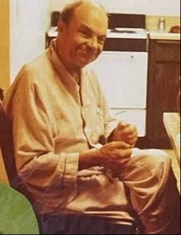 Wally Carr Wally Carr “He who has a library and a garden lacks nothing.”
Cicero was right. Getting up before daylight, my first hours are spent in our library. That sounds kind of snooty, talking about my library. In reality, the house I live in IS a library. There are bookshelves in the bedrooms, hallways, guest bedrooms and even in a bathroom. Open a cabinet and you’ll find even more books. Books even fill a walk-in closet where clothes are supposed to be. “Si Hortum in bibliotheca babes, deerit nixit,” as Wally would say Cicero’s quote, in the original Latin. He lived in a tiny apartment walking distance to the Lexington Public Library and the University of Kentucky Arboretum. Wally spent hours reading in libraries, walking through the University’s plantings, and was a happy and grateful man. Wally had the Cicero lesson down pat. He didn’t have much money, a yard or even a potted plant. But he had access to books and the beauty of a garden. Back in 1980s Lexington, Kentucky, the elderly William Wallace “Wally” Carr walked all around the University of Kentucky campus and throughout downtown at all hours. Usually disheveled, he was often mistaken for being homeless. He didn’t own a TV or car (or money). Wally probably wouldn’t have used them if he had. He was a professional Ciceronian. Wally was a grateful man. He lacked nothing. Books are a life essential. Wally knew that. Stoic philosopher Epictetus (50-135 AD) valued books more than gold and silver. He said a book’s greatest value is for its readers to apply the lessons they learn from it. Epictetus asked; “Tell me, what reason do you have to read? If you aim at nothing beyond mere enjoyment… you are just a poor, spiritless knave. But if you want to study to its proper end, what is your life other than a tranquil and serene existence?” Wally lived in the East Maxwell Street area known as the “Student Slums”. The area earned that title because it was close to the University of Kentucky campus and had lots of decrepit old houses divided into decrepit little rental units. Like his father, the great American Classics professor Dr. W.L. Carr, unless he was given a ride by someone with a vehicle, Wally walked everywhere he went. Now it’s almost 30 years since Wally’s death and I’m 800 miles away from Lexington. Getting up before sunrise, I start most days reading. When the sun’s up, I walk through the garden. With the garden, I help the plants grow. With books, I help myself to grow. These are the keys to Cicero’s — and Wally’s — greatness.
|
About claude E. hammondClaude Ellis Hammond, J.D., is a continuing education professional. He speaks frequently on historic and esoteric subjects. He's also an expert on coffee and drinks a lot of it. ArchivesCategories |

 RSS Feed