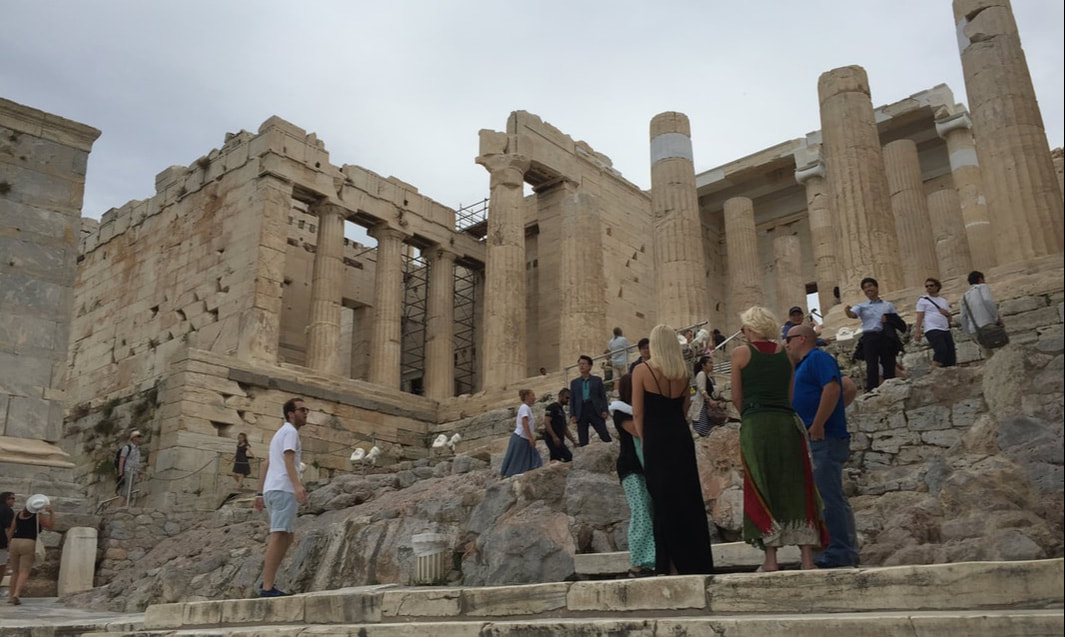
 On the steps of the Parthenon, Athens. (Photo Copyright Claude Hammond) 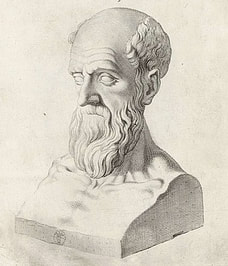 Clisthenes of Athens. (Public Domain) Clisthenes of Athens. (Public Domain) August 25, 2022
“The magistrates were elected according to qualifications of birth and wealth. At first, they governed for life, but later for terms of 10 years.” — Aristotle (Constitution of Athens, Chapter 3) Social class systems are a self-invented curse of humanity. That was true in ancient Greece and it’s true today. The philosopher Aristotle (384-322 BCE) wrote about the harsh class system that existed in Athens in the Sixth Century BCE. The creation of an upper class led to the rulership of one tyrant after another, ruling “democratically”, but being elected for life, or later for 10-year elected terms. All Athenians had until then been divided into four different tribes, with the aristocratic tribes getting special privileges. Excluded from being candidates in their poor semblance of the electoral process were the “commons”, or lower classes. Among these were small business owners, workers, freed slaves and the slaves themselves — the lowest of these tribes was one referred to as “the Accursed.” The very names of the commoners designated not just who they were, but what class they belonged to. Enter the great ruler Clisthenes. Trying to seize Athens’ political power was the aspiring tyrant Isagoras, who had the support of the wealthy Athenian aristocrats. While both Clisthenes and Isagoras were both from the aristocratic class, Clisthenes understood the importance of all Athenians — Commoner and Aristocrat — sharing the same rights. Rallying the commoners, Clisthenes became the Athenian ruler. His reforms would change Western history. “…instead of the four tribes among which the Athenians had been divided until then, Clisthenes made ten tribes, and parceled out the Athenians among them. He likewise changed the names of the tribes…” — Herodotus (Book V) In other words, the labels used to differentiate Aristocrats and Commoners were eliminated. New groups were created and all pretty much had the same rights as Athenians. The rights of Athenian commoners were finally recognized. But Isagoras got the support of powerful Sparta, a powerful city-state with an expert military, who sent its troops to enable Isagoras to forcibly seize Athens. The Athenians rallied behind their newly-found rights. They flooded into the streets to confront Isagoras and his Spartans. “A battle was fought accordingly and the Athenians gained a very complete victory, killing a vast number of the enemy, and taking seven hundred of them alive.” — Herodotus (Book V) The results of this victory were astounding. The idea of defending one’s personal rights, rather than fighting at the whim of some tyrant, was born in Athens. The historian Herodotus (484-425 BCE) describes it best. “Thus did the Athenians increase in strength… These things show that, while undergoing oppression, they let themselves be beaten, since they then worked for a master; but so soon as they got their freedom, each man was eager to do the best he could for himself. So fared it now with the Athenians.”
1 Comment
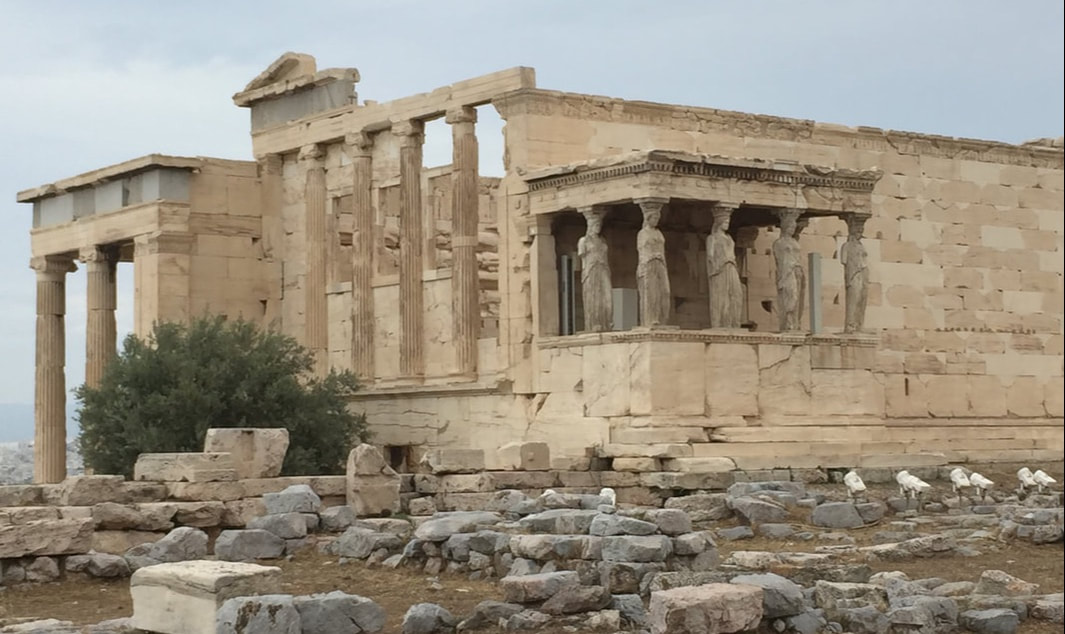 Temple of Athena, the Acropolis, Athens. (Claude Hammond photo) 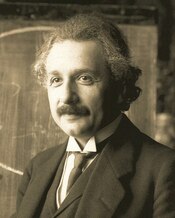 Albert Einstein in 1921. (F. Schmutzer photo / Wikimedia Commons) Albert Einstein in 1921. (F. Schmutzer photo / Wikimedia Commons) August 17, 2022
What is a mystic anyway? Is it that guy on the talk shows who writes all those books with his picture on the cover? Maybe you can find a mystic online with your favorite search engine. Or perhaps if you hike to a distant cave in the Himalayas, you’ll find a sage living there who can explain the meaning of life. Great mystic teachers are still with us — and always have been. They’re out there. Humanity would be nothing without them. Mystics have contributed to our lives in innumerable ways. We can’t escape their influence. Some of them don’t bother to write down what they say. For example, Socrates, Epictetus, Jesus, and Lao Tzu’s teachings are known through the writings of their students. Other mystics have written quite a lot, from Plato and Gregory of Nyssa to Myhuddin ibn Arabi and Ralph Waldo Emerson. On his daily long walks on the sidewalks of Lexington, Kentucky, over more than 30 years, my friend Wally Carr contemplated great thoughts as he recited Shakespeare and Roman Stoics like Marcus Aurelius and Cicero. Mysticism is vital. It is present. Modern science, philosophy, and government is nothing without the reality of unmeasurable realms. Real scholars have known this for a long time. Isaac Newton, the man credited with inventing much of modern calculus and physics, left behind thousands of documents on mystical and spiritual themes. Author Michael White - former science lecturer and director of studies at Oxford University - details this in his book, “Isaac Newton - The Last Sorcerer.” Philosopher Georg Hegel changed the world with his work. He was greatly influenced by Kabbalistic, Rosicrucian and alchemistic thinkers — this in addition to his being a devoted Lutheran. One of the world’s most important Hegel scholars, Dr. Glenn Alexander Magee of Long Island University, describes this philosopher’s mystic approach in his book, “Hegel and the Hermetic Tradition” The dogmatic atheism in modern academics and politics is intellectual insecurity. It is not based in reality. It’s the result of a cultural view that separates the spiritual and the physical. It’s a distortion of Aristotle, and was called to account by the Orthodox Christian priest Alexander Schmemann. Schmemann wrote the most profound book most people have never heard of; “For the Life of the World: Sacraments and Orthodoxy.” He opens his book with a quote from the atheist writer Ludwig Feuerbach, who claimed, “Man is what he eats.” Schmemann takes that quote and deftly dissects it. Separating the spiritual and the physical philosophically creates a barrier that does not exist. It distorts reality. There is no seperaton. Biologist Dr. Rupert Sheldrake of Cambridge University says that separation is unscientific and intellectually dishonest. The hazard, Schmemann writes, is that those who believe in the separation of the physical and the spiritual easily fall into the temptation of disbelief in all things spiritual. At the very least, Schmemann said, one’s perception is distorted with this belief. The essential existence of the spiritual gets too easily ignored and cheapened. All society suffers from this, in its media, academics, and politics. The spiritual exists. Mystics discover and reveal untold wisdom. All we need to do is listen. My old friend Wally was a mystic. He saw his daily walks as a pilgrimage. Wally was just disguised as a street person and people mostly ignored him. Art, philosophy and politics are transformed by the mystics. John Coltrane was just a drug-addled musician until his artistic genius was revealed by his spiritual awakening. Boxer Cassius Marcellus Clay, a savage fighter, became Muhammad Ali, a great voice for peace, after his conversion experience. And revolutionary physicist Albert Einstein kept a copy of mystic Helena Petrovna Blavatsky’s The Secret Doctrine on his worktable. (And if Albert took notes in the margins, that’s one copy of Secret Doctrine I’d love to study.) To deny the spiritual is to choose close-mindedness. That is the opposite of any kind of learning. 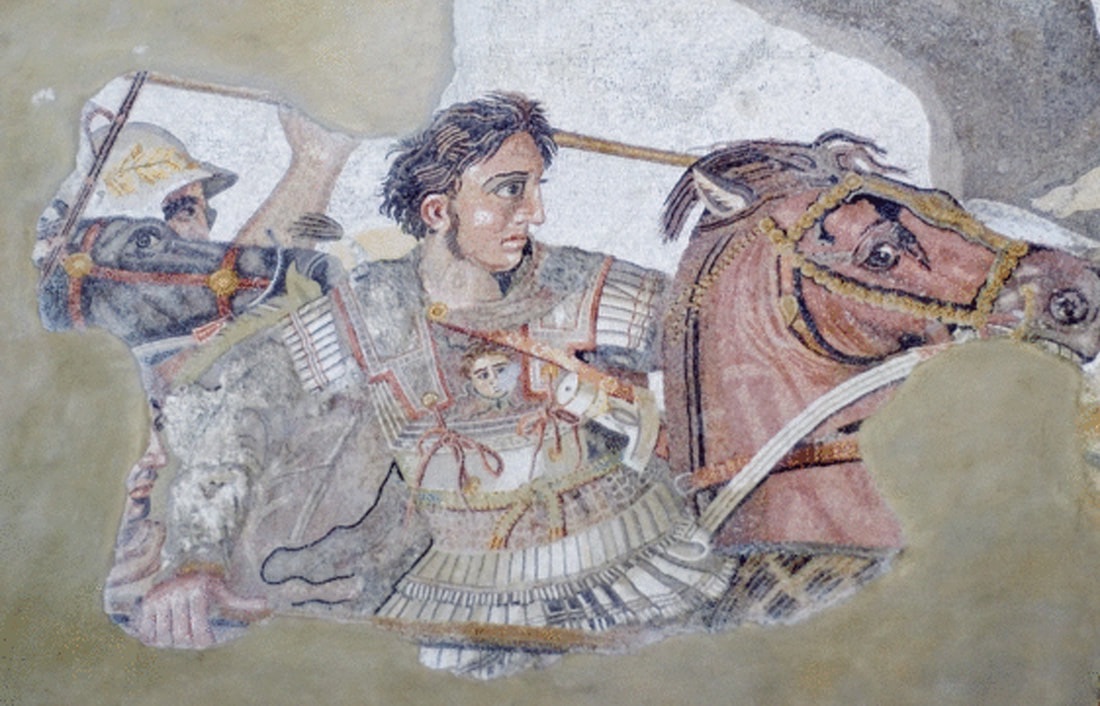 Mosaic image of Greek conqueror Alexander the Great (356-323 BC). 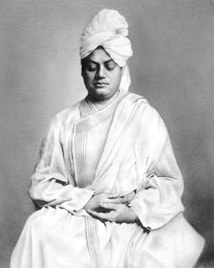 Swami Vivekananda (1863-1902) Swami Vivekananda (1863-1902) Wally was bigger than the Internet: You are, too.
The period of 1982-1994, the years of Wally's and my friendship, was certainly pre-internet. By the early ‘90s, what passed for the internet only existed between a few universities and businesses. Today, the internet is considered an essential. There’s no doubt what Wally Carr would have thought of it. Wally would be unimpressed. He was bigger than the internet. Seventeen years of solitude and electroshock treatments in a Long Island mental hospital during the 1940s and '50s— Wally was committed there on a legal technicality — forced him to put things in perspective. Here’s Wally’s perspective, more genuine than the entire Internet. “Now that I no longer desire it all, I have it all without desire.” — St. John of the Cross The Swami Vivekananda re-told the old folktale about Alexander the Great’s encounter with the wisest man in India. It was the young emperor’s custom to surround himself with the wisest and most learned men of each new land he conquered. When asked who the wisest man was in his new realm, Alexander was told about a lone sage who lived deep in the forest. Sending soldiers to retrieve the sage, the young emperor was less-than-impressed when a bedraggled, bearded old man, wearing nothing but a loincloth and a turban, was brought to him. In a conversation of just a few words, Alexander was dumbfounded by the surpassing wisdom of this old sage. He offered the sage riches if he would return to Greece with him. The old man refused. Then Alexander offered the sage a harem of the most beautiful women of the land. Beginning to laugh, the sage once again refused. Alexander then threatened the sage with execution if he refused to be the emperor’s adviser. The old sage burst out laughing in the face of the young emperor — an unthinkable act of disrespect in the mind of those sitting in Alexander’s court. “Have you not learned anything?” the sage laughed. “I am immortal! What truths I possess cannot be killed! You might take my body away from me, but that would not destroy the truth, nor would you learn it by doing so!” Alexander the Great sat silently, his court aghast at the impudent words of the motley sage. Most expected the bearded old man to be sent to his torture and execution. There was a moment of silence. In a humble voice, Alexander then ordered the sage to be returned to his forest, unharmed. Wally was like the sage. He didn’t need the internet, nor its precursor, the television. He would have understood that there were great resources online, but using some sort of electric device to get to them would be too expensive and too much trouble. It was much easier to walk to a library or take a book off of the shelf. The truths Wally possessed could not be killed, distorted, controlled or marketed. He did not need an online connection to be wise or profound. Nor did Wally need to be monitored or marketed to. Seventeen years of solitude and electroshock treatments in a Long Island mental hospital during the 1940s and '50s— Wally had been committed there on a legal technicality — put things in perspective. Despite the awful treatments of the day, Wally found wisdom and the eternal by contemplating what he learned from the ancient wisdom he'd studied. So Wally would likely say that the internet is simply a tool, and a fickle one, at that. Alexander the Great would probably have loved the internet. The contemplative Wally, like the sage in the forest, saw the connection to the Divine as being infinitely better. Our ability to connect to the Divine makes just one human a lot bigger than the whole of the internet. Humans can live without the internet. But the internet cannot live without humans. You are bigger than the internet. 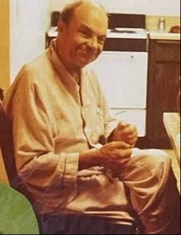 Wally Carr Wally Carr “He who has a library and a garden lacks nothing.”
Cicero was right. Getting up before daylight, my first hours are spent in our library. That sounds kind of snooty, talking about my library. In reality, the house I live in IS a library. There are bookshelves in the bedrooms, hallways, guest bedrooms and even in a bathroom. Open a cabinet and you’ll find even more books. Books even fill a walk-in closet where clothes are supposed to be. “Si Hortum in bibliotheca babes, deerit nixit,” as Wally would say Cicero’s quote, in the original Latin. He lived in a tiny apartment walking distance to the Lexington Public Library and the University of Kentucky Arboretum. Wally spent hours reading in libraries, walking through the University’s plantings, and was a happy and grateful man. Wally had the Cicero lesson down pat. He didn’t have much money, a yard or even a potted plant. But he had access to books and the beauty of a garden. Back in 1980s Lexington, Kentucky, the elderly William Wallace “Wally” Carr walked all around the University of Kentucky campus and throughout downtown at all hours. Usually disheveled, he was often mistaken for being homeless. He didn’t own a TV or car (or money). Wally probably wouldn’t have used them if he had. He was a professional Ciceronian. Wally was a grateful man. He lacked nothing. Books are a life essential. Wally knew that. Stoic philosopher Epictetus (50-135 AD) valued books more than gold and silver. He said a book’s greatest value is for its readers to apply the lessons they learn from it. Epictetus asked; “Tell me, what reason do you have to read? If you aim at nothing beyond mere enjoyment… you are just a poor, spiritless knave. But if you want to study to its proper end, what is your life other than a tranquil and serene existence?” Wally lived in the East Maxwell Street area known as the “Student Slums”. The area earned that title because it was close to the University of Kentucky campus and had lots of decrepit old houses divided into decrepit little rental units. Like his father, the great American Classics professor Dr. W.L. Carr, unless he was given a ride by someone with a vehicle, Wally walked everywhere he went. Now it’s almost 30 years since Wally’s death and I’m 800 miles away from Lexington. Getting up before sunrise, I start most days reading. When the sun’s up, I walk through the garden. With the garden, I help the plants grow. With books, I help myself to grow. These are the keys to Cicero’s — and Wally’s — greatness.
|

About claude E. hammondClaude Ellis Hammond, J.D., is a continuing education professional. He speaks frequently on historic and esoteric subjects. He's also an expert on coffee and drinks a lot of it. ArchivesCategories |

 RSS Feed