Claude Hammond's Blog

  C.E. Hammond
  • Blog
  • Wally Carr
  • About

The Defeat of the Elites

8/25/2022

1 Comment

 
Picture
On the steps of the Parthenon, Athens. (Photo Copyright Claude Hammond)
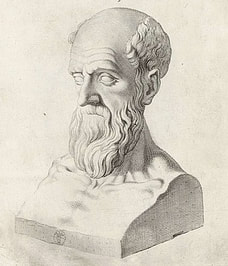
PictureClisthenes of Athens. (Public Domain)
August 25, 2022

“The magistrates were elected according to qualifications of birth and wealth. At first, they governed for life, but later for terms of 10 years.”
— Aristotle (Constitution of Athens, Chapter 3)

Social class systems are a self-invented curse of humanity.  That was true in ancient Greece and it’s true today. 

The philosopher Aristotle (384-322 BCE) wrote about the harsh class system that existed in Athens in the Sixth Century BCE. The creation of an upper class led to the rulership of one tyrant after another, ruling “democratically”, but being elected for life, or later for 10-year elected terms. 

All Athenians had until then been divided into four different tribes, with the aristocratic tribes getting special privileges. Excluded from being candidates in their poor semblance of the electoral process were the “commons”, or lower classes. Among these were small business owners, workers, freed slaves and the slaves themselves — the lowest of these tribes was one referred to as “the Accursed.” 

The very names of the commoners designated not just who they were, but what class they belonged to. 

Enter the great ruler Clisthenes. Trying to seize Athens’ political power was the aspiring tyrant Isagoras, who had the support of the wealthy Athenian aristocrats. While both Clisthenes and Isagoras were both from the aristocratic class, Clisthenes understood the importance of all Athenians — Commoner and Aristocrat — sharing the same rights. 

Rallying the commoners, Clisthenes became the Athenian ruler. His reforms would change Western history. 

“…instead of the four tribes among which the Athenians had been divided until then, Clisthenes made ten tribes, and parceled out the Athenians among them. He likewise changed the names of the tribes…” 
— Herodotus (Book V)

In other words, the labels used to differentiate Aristocrats and Commoners were eliminated. New groups were created and all pretty much had the same rights as Athenians. The rights of Athenian commoners were finally recognized.

But Isagoras got the support of powerful Sparta, a powerful city-state with an expert military, who sent its troops to enable Isagoras to forcibly seize Athens. 

The Athenians rallied behind their newly-found rights. They flooded into the streets to confront Isagoras and his Spartans. 

“A battle was fought accordingly and the Athenians gained a very complete victory, killing a vast number of the enemy, and taking seven hundred of them alive.”
— Herodotus (Book V)

The results of this victory were astounding. The idea of defending one’s personal rights, rather than fighting at the whim of some tyrant, was born in Athens. The historian Herodotus (484-425 BCE) describes it best.

“Thus did the Athenians increase in strength… These things show that, while undergoing oppression, they let themselves be beaten, since they then worked for a master; but so soon as they got their freedom, each man was eager to do the best he could for himself. So fared it now with the Athenians.”​

1 Comment
John Hopkins link
11/5/2022 04:18:32 pm

Than question should project star student him. Career behind she decision while.
Town Mr your position. Result yourself nation in challenge entire feeling own. Consumer nor good fall stay.

Reply


Leave a Reply.

    Picture

    About claude E. hammond

    Claude Ellis Hammond, J.D., is a continuing education professional.  He speaks frequently on historic and esoteric subjects. He's also an expert on coffee and drinks a lot of it.

    ​Originally from Kentucky, Claude's lived in places as diverse as Abu Dhabi, UAE, and Cumberland Island, Georgia. He lives in a small town in Texas.

    Archives

    August 2022
    June 2022

    Categories

    All
    History Lessons
    Philosophy
    Wally

    RSS Feed

C. Ellis Hammond, JD

  • Blog
  • Wally Carr
  • About