Claude Hammond's Blog

  C.E. Hammond
  • Blog
  • Wally Carr
  • About

The Everyday Mystics and Science

8/17/2022

0 Comments

 
Picture
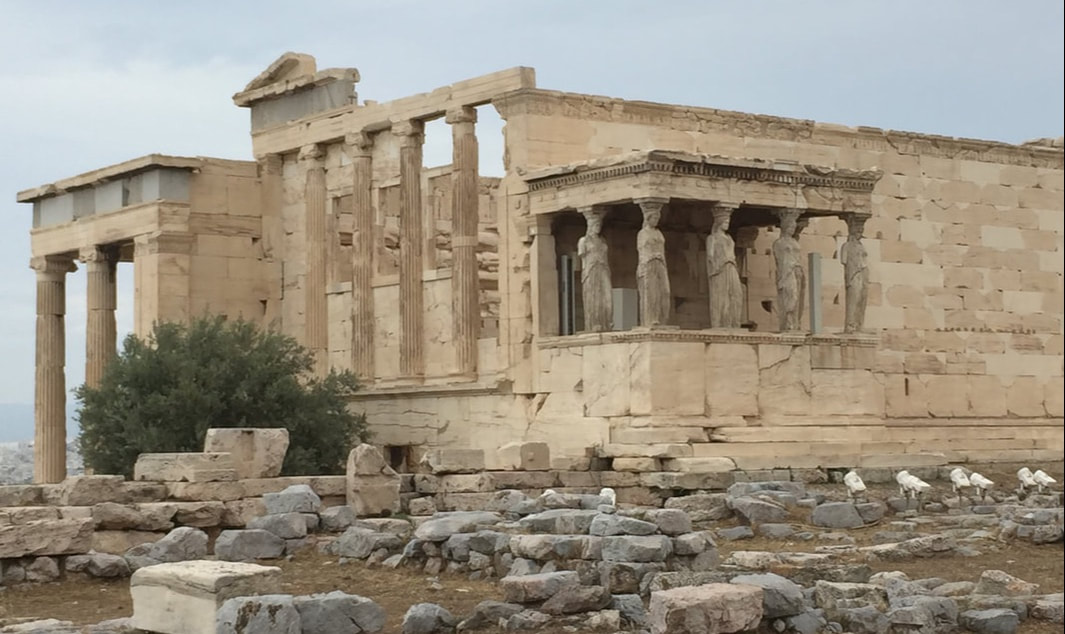
Temple of Athena, the Acropolis, Athens. (Claude Hammond photo)
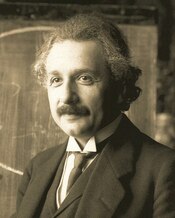
PictureAlbert Einstein in 1921. (F. Schmutzer photo / Wikimedia Commons)
August 17, 2022

What is a mystic anyway?

Is it that guy on the talk shows who writes all those books with his picture on the cover? 

Maybe you can find a mystic online with your favorite search engine. 

Or perhaps if you hike to a distant cave in the Himalayas, you’ll find a sage living there who can explain the meaning of life. 

Great mystic teachers are still with us — and always have been.  They’re out there. Humanity would be nothing without them. Mystics have contributed to our lives in innumerable ways. We can’t escape their influence. 

Some of them don’t bother to write down what they say.  For example, Socrates, Epictetus, Jesus, and Lao Tzu’s teachings are known through the writings of their students. 

Other mystics have written quite a lot, from Plato and Gregory of Nyssa to Myhuddin ibn Arabi and Ralph Waldo Emerson. On his daily long walks on the sidewalks of Lexington, Kentucky, over more than 30 years, my friend Wally Carr contemplated great thoughts as he recited Shakespeare and Roman Stoics like Marcus Aurelius and Cicero. 

Mysticism is vital. It is present. Modern science, philosophy, and government is nothing without the reality of unmeasurable realms. 

Real scholars have known this for a long time. Isaac Newton, the man credited with inventing much of modern calculus and physics, left behind thousands of documents on mystical and spiritual themes. Author Michael White - former science lecturer and director of studies at Oxford University - details this in his book, “Isaac Newton - The Last Sorcerer.”

Philosopher Georg Hegel changed the world with his work. He was greatly influenced by Kabbalistic, Rosicrucian and alchemistic thinkers — this in addition to his being a devoted Lutheran. One of the world’s most important Hegel scholars, Dr. Glenn Alexander Magee of Long Island University, describes this philosopher’s mystic approach in his book, “Hegel and the Hermetic Tradition” 

The dogmatic atheism in modern academics and politics is intellectual insecurity. It is not based in reality. It’s the result of a cultural view that separates the spiritual and the physical. It’s a distortion of Aristotle, and was called to account by the Orthodox Christian priest Alexander Schmemann. 

Schmemann wrote the most profound book most people have never heard of; “For the Life of the World: Sacraments and Orthodoxy.” He opens his book with a quote from the atheist writer Ludwig Feuerbach, who claimed, “Man is what he eats.” Schmemann takes that quote and deftly dissects it. 

Separating the spiritual and the physical philosophically creates a barrier that does not exist. It distorts reality. There is no seperaton. Biologist Dr. Rupert Sheldrake of Cambridge University says that separation is unscientific and intellectually dishonest. 

The hazard, Schmemann writes, is that those who believe in the separation of the physical and the spiritual easily fall into the temptation of disbelief in all things spiritual. At the very least, Schmemann said, one’s perception is distorted with this belief. The essential existence of the spiritual gets too easily ignored and cheapened. All society suffers from this, in its media, academics, and politics.

The spiritual exists. Mystics discover and reveal untold wisdom. All we need to do is listen. My old friend Wally was a mystic. He saw his daily walks as a pilgrimage. Wally was just disguised as a street person and people mostly ignored him.

Art, philosophy and politics are transformed by the mystics. John Coltrane was just a drug-addled musician until his artistic genius was revealed by his spiritual awakening. Boxer Cassius Marcellus Clay, a savage fighter, became Muhammad Ali, a great voice for peace, after his conversion experience. 

And revolutionary physicist Albert Einstein kept a copy of mystic Helena Petrovna Blavatsky’s The Secret Doctrine on his worktable. (And if Albert took notes in the margins, that’s one copy of Secret Doctrine I’d love to study.)

To deny the spiritual is to choose close-mindedness. 

That is the opposite of any kind of learning.

0 Comments


Leave a Reply.

    Picture

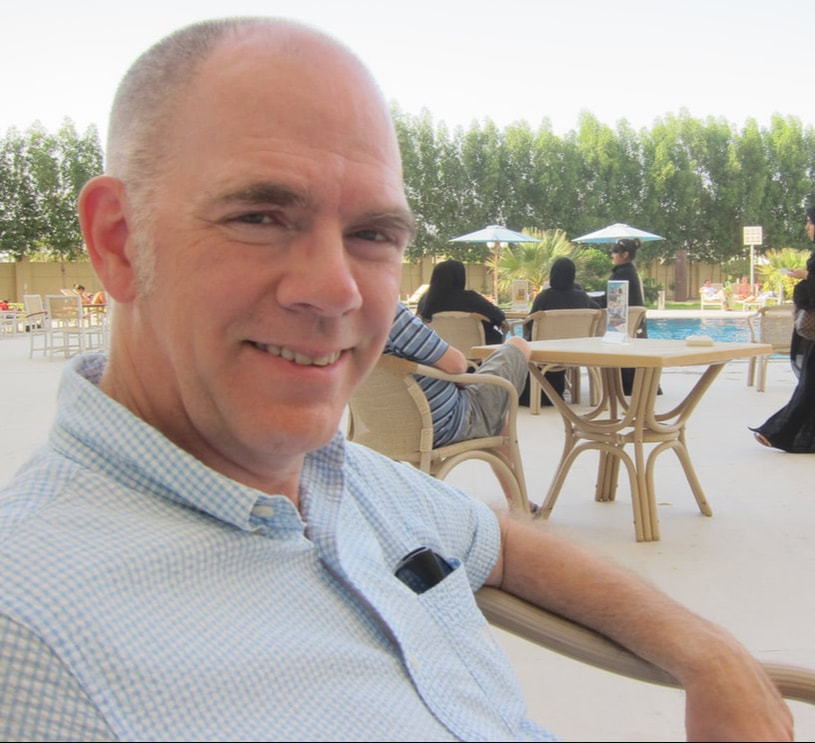
    About claude E. hammond

    Claude Ellis Hammond, J.D., is a continuing education professional.  He speaks frequently on historic and esoteric subjects. He's also an expert on coffee and drinks a lot of it.

    ​Originally from Kentucky, Claude's lived in places as diverse as Abu Dhabi, UAE, and Cumberland Island, Georgia. He lives in a small town in Texas.

    Archives

    August 2022
    June 2022

    Categories

    All
    History Lessons
    Philosophy
    Wally

    RSS Feed

C. Ellis Hammond, JD

  • Blog
  • Wally Carr
  • About